
How Is Money Created? How the Modern Monetary System Works

How Is Money Created? How the Modern Monetary System Works


4
In modern economies, money is not created only by printing physical banknotes. In fact, most money today is created digitally within the banking system. While central banks control the overall money supply, commercial banks create new money through lending. This process forms the foundation of the modern monetary system used by most economies around the world.
How Is Money Created?
Many people believe that governments simply print money whenever they need it. However, the modern financial system is more complex.
Money is generally created in two main ways:
- Physical money issued by central banks
- Digital money created by commercial banks through lending
Although central banks print banknotes and coins, the majority of money in circulation actually exists digitally in bank accounts.
To better understand how central banks operate, you can read this analysis:
👉 https://myspektra.com/2026/03/11/merkez-bankasi-nedir-ve-nasil-calisir-ekonomiyi-kim-yonetiyor/
How Central Banks Create Money
Central banks influence the money supply using several tools.
These include:
- buying government bonds
- providing liquidity to banks
- adjusting monetary policy
These actions increase the amount of money circulating in the economy and are often described as expanding the money supply.
However, if the money supply grows too quickly, it may lead to inflation.
To understand the causes of rising inflation, see this article:
How Banks Create Money
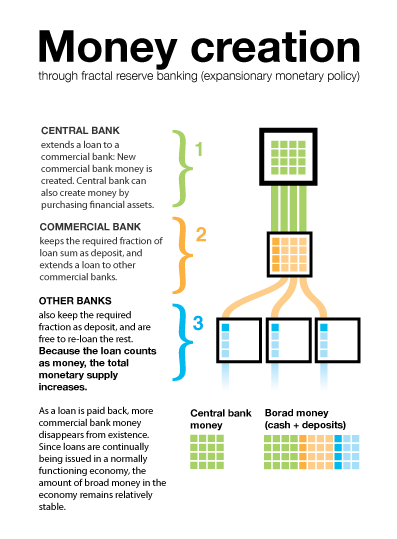
In modern economies, most money is created by commercial banks.
When a bank issues a loan, new money is effectively created.
For example:
- a bank approves a loan
- the borrower spends the money
- the money is deposited into another bank
- the banking system expands the money supply through lending
This process is known as credit creation.
Why Is the Money Supply Important?
The amount of money circulating in the economy plays a critical role in economic stability.
Money supply influences:
- inflation
- economic growth
- financial markets
Central banks therefore monitor and manage the money supply carefully.
Interest rate policies also affect the amount of money circulating in the economy.
To learn why central banks raise interest rates, see this article:
👉 https://myspektra.com/2026/03/11/faiz-neden-artirilir-merkez-bankalari-faizi-neden-yukseltir/
Does Printing Money Cause Inflation?
If the amount of money in the economy grows faster than the production of goods and services, prices may rise.
This is why many economists argue that:
Excessive money creation can lead to inflation.
However, during economic crises central banks may increase the money supply to stimulate economic activity.
How the Modern Monetary System Works
The modern monetary system operates through the interaction of three key components:
- Central banks
- Commercial banks
- Financial markets
Central banks regulate the system and influence monetary policy, while commercial banks create credit that fuels economic activity.
Together, these institutions form the structure of the global financial system.
Conclusion
Money creation in modern economies is far more complex than simply printing banknotes. While central banks control the overall money supply, commercial banks play a major role by creating money through lending. This interconnected system of central banks, banks, and financial markets forms the backbone of the modern monetary system.

You must be logged in to post a comment.