
Why Do Stock Markets Fall? Why Do They Rise in the Long Term?

Why Do Stock Markets Fall? Why Do They Rise in the Long Term? (In-Depth Analysis)

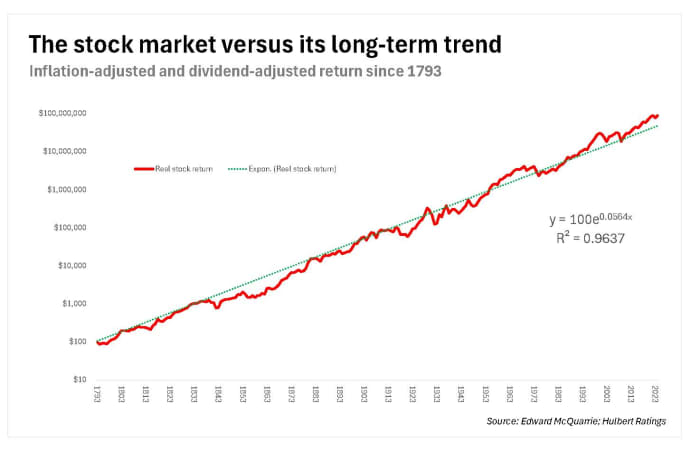

Short answer: Stock markets fall in the short term due to fear, interest rates, liquidity changes, and uncertainty—but rise in the long term due to economic growth, corporate profits, and expanding money supply. Market declines are part of the system; long-term growth is the direction of the system.
What Is the Stock Market, Really?
The stock market is not just a place where stocks are traded.
👉 It is a system that prices the future today
📊 Key Reality
The market does not reflect:
- today’s economy
- current conditions
👉 It reflects expectations about the future
Why Do Stock Markets Fall? (Deep Analysis)
1. Supply and Demand (Core Mechanism)
At the most basic level:
- more buyers → prices go up
- more sellers → prices go down
👉 But the real question is:
Why do many investors sell at the same time?
Because markets are driven by:
- expectations
- fear
- macroeconomic signals
2. Interest Rates (The Biggest Driver)


When interest rates rise:
- borrowing becomes expensive
- investments slow down
- future cash flows lose value
📊 Financial Reality
Stock valuation is based on:
👉 discounted future cash flows
Higher interest rates → higher discount rate → lower valuations
👉 Result: Markets fall
3. Inflation and Monetary Policy
When inflation rises:
- central banks increase interest rates
- liquidity is reduced
🔁 Chain Reaction
inflation ↑
→ rates ↑
→ borrowing ↓
→ growth ↓
→ stocks ↓
4. Market Psychology (The Strongest Force)


Markets are heavily influenced by human behavior.
During downturns:
- investors sell together
- correlations increase
- panic spreads rapidly
👉 This is why:
market crashes happen faster than rallies
5. Algorithmic Trading (Modern Risk)


Today, a large portion of trading is automated.
⚠️ Risk
- algorithms detect sell signals
- execute trades instantly
- trigger chain reactions
👉 Result:
faster and sharper declines
6. Liquidity and Money Flow
Markets rise when:
👉 liquidity increases
Markets fall when:
👉 liquidity is removed
📊 Example
- central banks print money → markets rise
- central banks tighten policy → markets fall
👉 This is known as the liquidity cycle
7. Geopolitics and Uncertainty
Wars, political instability, and crises:
- increase uncertainty
- reduce investor confidence
👉 Investors move to:
- cash
- gold
- safer assets
👉 Result:
markets decline
Short-Term Markets: Chaotic and Unpredictable


4
Scientific studies show:
👉 short-term market movements are close to random
📊 Meaning
- daily movements are unpredictable
- news has immediate impact
👉 Short term = noise
Why Do Markets Rise in the Long Term?


1. Economic Growth
The global economy grows over time:
- production increases
- companies expand
👉 Growing companies = rising stock values
2. Corporate Profits
Stocks represent businesses.
Businesses:
- generate profits
- scale over time
👉 Long-term profit growth = market growth
3. Money Supply Expansion (Critical Factor)
Central banks continuously expand the money supply.
This money flows into:
- stocks
- real estate
- assets
👉 Result:
asset prices increase over time
4. Inflation Effect
Inflation reduces the value of money.
But:
- asset prices rise
👉 Meaning:
stocks act as an inflation hedge
5. Technology and Productivity
- innovation increases efficiency
- new industries emerge
👉 This drives:
long-term value creation
Market Cycles: Rise and Fall


Markets move in cycles:
- expansion
- peak
- decline
- recovery
👉 This cycle repeats continuously.
The Key Insight
📉 Why do markets fall fast?
- panic
- leverage
- automation
📈 Why do markets rise slowly?
- trust builds gradually
- growth takes time
👉 This is why:
markets take the stairs up and the elevator down
Common Misconception
👉 “Do markets always fall?”
No.
Because:
- economies grow
- money supply increases
- companies evolve
👉 Therefore:
long-term direction is upward
Who Wins in the Market?
📊 Long-term winners:
- patient investors
- disciplined strategies
📉 Short-term winners:
- traders
- algorithmic systems
FINAL CONCLUSION
Markets are:
- chaotic in the short term
- cyclical in the medium term
- upward trending in the long term
🔥 Final Answer
👉 Stock markets fall because of fear, tightening liquidity, and rising rates—but they rise in the long run because economies grow, money expands, and companies create value.

You must be logged in to post a comment.