
We’re Moving to 5G—But China Is Preparing for 10G: What Does This Really Mean for the Future?

We’re Moving to 5G—But China Is Preparing for 10G: What Does This Really Mean for the Future?
The world is still in the early stages of adopting 5G technology, yet some countries—especially China—are already talking about something even more advanced:
👉 10G
Yes, you read that right.
Before most people have fully experienced what 5G can do, the tech world is already preparing for the next leap.
So what does this actually mean?
- Is 5G really a game changer or just faster internet?
- What exactly is 10G?
- Why is China ahead in this race?
- And most importantly: How will these technologies affect your daily life?
Let’s break this down—not just technically, but in terms of real-world impact.
What Is 5G (Beyond Just Speed)?


5G stands for fifth-generation wireless technology.
But it’s not just about faster downloads.
👉 5G = Speed + Low Latency + Massive Connectivity
Key Features of 5G:
- Speeds up to 10x faster than 4G
- Ultra-low latency (near real-time communication)
- Ability to connect millions of devices simultaneously
This means:
5G is not just upgrading phones—it’s building a fully connected world.
How Will 5G Change Everyday Life?


The real power of 5G lies in its applications:
1. Smart Cities
- Traffic systems will optimize themselves
- Energy usage will be automated
2. Autonomous Vehicles
- Cars will communicate instantly
- Accidents could be drastically reduced
3. Healthcare
- Remote surgeries with near-zero delay
- Real-time patient monitoring
4. Internet of Things (IoT)
- Homes, devices, and systems all connected
But Is 5G Really That Perfect?
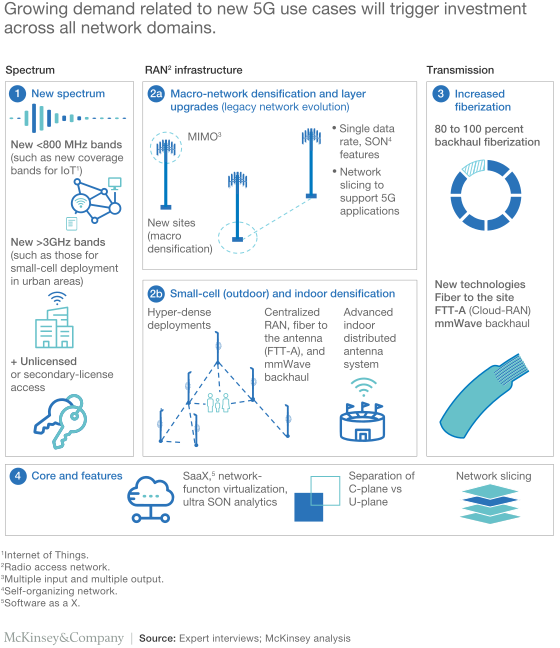

Not quite.
Despite its potential, 5G still faces challenges:
- Expensive infrastructure
- Limited coverage in many areas
- Not fully deployed worldwide
So:
5G is powerful—but still incomplete.
What Is 10G? Reality or Just Hype?


Now let’s talk about 10G, where things get interesting.
There’s confusion here:
👉 10G doesn’t always mean “10th generation wireless”
Instead, it usually refers to:
- 10 Gigabit-per-second speeds
- Advanced fiber-based infrastructure
In China’s case, it means:
👉 ultra-fast, ultra-stable, next-level internet infrastructure
Why Is China Ahead?


China’s advantage comes from:
- Massive government investment
- Fast infrastructure deployment
- Large-scale testing environments
This allows China to:
👉 adopt and experiment with new technologies faster than most countries
5G vs 10G: What’s the Real Difference?

🔥 Speed
- 5G → up to 10 Gbps
- 10G → 10 Gbps and beyond
⚡ Latency
- 5G → very low
- 10G → near-zero
🌐 Usage
- 5G → wireless mobile networks
- 10G → wired fiber infrastructure
👉 In simple terms:
5G connects everything wirelessly
10G makes everything insanely fast
What Will 10G Change in Real Life?


With 10G-level infrastructure:
- 8K streaming becomes instant
- VR/AR becomes truly immersive
- The metaverse becomes stable and usable
- Holographic communication becomes realistic
Imagine:
👉 video calls replaced by 3D holograms in real time
The Next Step: 6G and Beyond


While we’re still discussing 5G and 10G…
👉 the industry is already planning 6G
Expected features:
- Near-zero latency globally
- Satellite-based worldwide coverage
- AI-integrated networks
The Most Important Truth
This isn’t just about speed.
👉 It’s about connection, data, and control
The real transformation is:
- everything connected
- everything synchronized
- everything in real time
Final Conclusion
5G is building the connected world
10G is building the foundation of extreme speed
6G will build the intelligent global network
And the most important takeaway:
The future isn’t coming slowly—we’re just noticing it too late.

You must be logged in to post a comment.